> For the complete documentation index, see [llms.txt](https://support.growlytics.in/llms.txt). Markdown versions of documentation pages are available by appending `.md` to page URLs; this page is available as [Markdown](https://support.growlytics.in/campaigns/analyzing-campaign-reports.md).
# Analyzing Campaign Reports
For every campaign run on Growlytics, you get detailed reports of how your campaigns are performing and how much revenue the campaigns are generating.
The above screenshot clearly indicates, for each campaign, you can see all the delivery statistics, conversions, and revenue generated.
1. **Eligible:** Eligible customers to whom messages will be sent.
2. **Sent:** Count of messages sent for this campaign.
3. **Delivered:** Count of messages delivered for this campaign.
4. **Failed:** Count of messages not delivered for this campaign.
5. **Opens:** a. **Unique Opens:** # of customers opened email. b. **Total Opens:** Total email opens.
6. **Clicks:** a. **Unique Clicks:** # of customers clicked on message link. b. **Total Clicks:** Total message clicks.
7. **Conversions:** a. **Total Conversions:** # of conversions. b. **Total Revenue:** Amount of revenue generated.
### Setting up Conversion Tracking
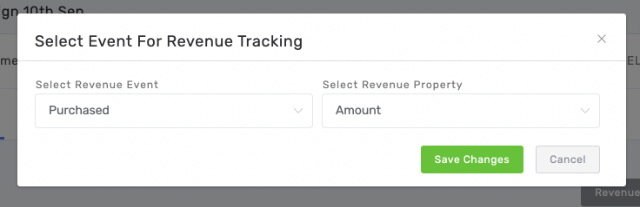
For conversions, you can select the conversion event by clicking on the 'Revenue Tracking Setup' button. You can specify the event you want to use for conversion and revenue tracking as shown in the screenshot below.
Click [here](/campaigns/analyzing-campaign-reports/conversion-tracking.md) to know more about conversion tracking.